TP-LINK tpCamera
- 4.1
- Rating
- 1.00M
- Installs
- Free
- Price

 Analysis by App-foxy
I spent time with TP-LINK tpCamera as the companion app for checking compatible TP-LINK cameras from a phone. Its purpose is refreshingly direct: open the app, see what is happening, and keep an eye on a room or property without needing to sit in front of a computer. That simplicity is also the key to deciding whether it belongs on your device. If you already use a supported TP-LINK camera, this free app can be a practical daily viewer. If you want a complete modern security platform with broad camera compatibility, deep automation, or a large smart-home ecosystem, it may feel limited.
The app sits in the Libraries & Demo section, although I think of it less as a general library tool and more as a dedicated camera-viewing utility. It comes from TP-LINK SYSTEMS INC., carries an average rating of 4.2 from around 21 thousand ratings, and has passed over a million installs. Those figures suggest that it has found a stable audience among owners of the company’s camera hardware, rather than trying to be an all-purpose surveillance application.
Using tpCamera as a dependable everyday viewer
I find the most dependable way to use tpCamera is to treat each check as a small, deliberate task: choose the view that answers your question, confirm what you need, then close the app. That keeps the camera useful without turning a quick glance into constant monitoring. I’d also make the routine easy for other household members to follow, which brings up an important next step: deciding what “reliable” should mean for your particular setup.
You May Also Like

 Pandora - Music & Podcasts
Pandora’s Music Is Easy to Start, but Harder to Recover
Pandora’s strength is its low-effort path from a seed to a station. Its weak spot is how much confidence it asks you to place in connection, setup, and quiet recovery.

 AccuWeather: Weather Radar
AccuWeather Review: A Quick, Clear Forecast for Everyday Decisions
For everyday plans, the best forecast is the one you can understand quickly. AccuWeather makes rain timing, radar, and local conditions easy to act on, with a few trade-offs.

 Hill Climb Racing
Why Hill Climb Racing Still Turns Crashes Into One More Run
A tiny car, a bumpy hill and one more upgrade: Hill Climb Racing keeps resurfacing because its simple chaos makes every near-miss feel personal.

 AliExpress - Shopping App
AliExpress Makes Global Shopping Feel Personal, but Shoppers Bear the Risk
AliExpress turns a global marketplace into a pocket-sized discovery engine. Its reach is useful, its shopping loop compelling, and its trade-offs easy to miss.

 Lords Mobile: Kingdom Wars
Lords Mobile Is a Kingdom-Building Routine, Not a Quick Match
A case-by-case verdict on the building, battles, device demands, and social commitments that make Lords Mobile rewarding for some players and exhausting for others.

 PDF Scanner app - TapScanner
TapScanner Makes Paperwork Easier to Capture, Check, and Share
TapScanner makes scanning with a phone feel less like a rescue operation and more like a dependable step in getting work done. Its capture tools are useful, though not flawless.
More From Our News Desk
View All News


The baseline workflow is deliberately simple
My normal workflow begins with opening the app when I want a quick visual check. The important distinction is that tpCamera is not trying to replace the camera itself. It is the mobile window into that camera. That makes the quality of the experience depend on two things working together: the camera must be configured properly, and the phone must have a usable connection to it.
For a household, the most realistic use is checking a familiar space at selected moments rather than watching continuously. I might look at an entryway after hearing a sound, check whether a child has returned home, or glance at a room while away. The value is in reducing the number of steps between concern and confirmation. I do not need to open a browser, find a computer, or remember a separate viewing routine.
That also explains why I would not judge it like a social app or a general video platform. The app has one central job, and a good session should feel uneventful. You open it, select the camera you need, inspect the live view, and close it. Experienced use comes from making that sequence predictable rather than from constantly changing settings.
One useful habit is to decide in advance what each camera is for. A camera aimed at a doorway is best treated as an arrival and departure check. One facing a shared room may be useful for a quick household glance, but it should not automatically become a substitute for direct supervision. Giving each view a clear purpose keeps the app from becoming a source of unnecessary checking.
What the app is good at in a normal day
tpCamera makes the most sense for people who already have TP-LINK camera equipment and want a straightforward mobile companion. It is particularly approachable for a household member who does not want to learn a complicated monitoring interface. The store summary describes viewing cameras anywhere and anytime, and in practical terms that means the app is useful when you are away from the physical camera and need a quick look through your phone.
A realistic example would be leaving home for work and later wondering whether a package or visitor has arrived. I would open the app, check the relevant view, and close it once I had enough information. That is a better fit for this tool than leaving a live feed open all day, especially because a phone screen, network connection, and battery are not ideal substitutes for a dedicated monitoring station.
Another good use is coordinating with someone else in the home. Instead of asking a person to describe what is happening in another room, I can check the view myself. This is convenient, but it also calls for sensible boundaries. A camera app should support agreed household routines, not encourage people to monitor private spaces casually.
The app is free and rated for Everyone, so the entry barrier is low. That does not mean every feature or behavior will suit every family, though. Adults should still decide where cameras are appropriate, who can access them, and when the app should be used. The age rating describes the app’s general content, not the privacy decisions surrounding a camera installation.
Initial setup and the first useful routine
The best first session is not a rushed test while you are already away from home. I would set up and verify the camera while connected to the same familiar network and with the hardware nearby. Once the view appears correctly, I would close and reopen the app, then test the viewing routine again. This simple repeat exposes problems before they matter.
I also recommend checking every camera name from the perspective of a person using the app quickly. Names such as “front,” “hall,” or “office” are easier to recognize than vague labels. If the app presents several views, clear naming reduces the chance of opening the wrong feed when you are distracted or in a hurry.
After setup, I would create a repeatable check: open tpCamera, choose the intended view, wait for the image to become useful, and exit rather than leaving the app running without a reason. This is not a flashy trick, but it makes the application more dependable. You learn how long your own connection takes, which camera is most useful, and which situations actually justify opening it.
Settings worth checking before relying on it
I would not change every available option simply because it exists. Instead, I would inspect the settings that affect how confidently I can identify a camera and how comfortably I can use the app. The first is the camera list and its naming. A tidy list is a small advantage that becomes important when several feeds are involved.
Next, I would review any account or device-management area presented by the app and make sure the correct camera is associated with the intended setup. If a view disappears or behaves differently after a network change, this is the first place I would look before assuming the camera itself has failed.
Connection behavior deserves attention too. A live camera view is sensitive to network conditions, so I would test it both at home and from the location where I expect to use it remotely. A feed that works perfectly beside the camera may not feel equally responsive from a weak mobile connection. That difference is not necessarily an app defect; it is a reason to test the exact routine you plan to depend on.
The most useful setting is often the one that makes the right camera obvious. Clear labels, an uncluttered device list, and a known viewing order can save more time than repeatedly adjusting image preferences. I prefer to optimize the path to the correct feed first, then worry about presentation.
I would also pay attention to how the phone behaves during a viewing session. If the screen dims quickly, if the device is held at an awkward angle, or if the app is interrupted by another task, the experience can feel less smooth even when the camera is working. A short, intentional check is usually more reliable than trying to turn the phone into a permanent display.
Faster patterns for people who use it repeatedly
Once the basic routine works, speed comes from consistency. I keep the app in a predictable place on the phone rather than searching for it. I also avoid opening it merely out of habit. When I do need it, I already know which camera is relevant and what question I am trying to answer.
For multiple cameras, I would use a fixed viewing order based on the day. For example, I might check the entrance first, then a shared interior area, and finally a less important view. This is more efficient than tapping randomly through every camera. It also reduces the chance of overlooking the view that matters most.
Another practical pattern is separating quick confirmation from investigation. If I only need to know whether a room is occupied or whether an object is present, I take a brief look and stop. If something genuinely needs attention, I handle that as a separate task rather than repeatedly refreshing the same screen. This keeps the app useful without turning it into a source of constant distraction.
For travel, I would test the app before leaving, not after arriving at the destination. That gives me a chance to confirm that the camera list is available and that remote viewing behaves as expected. I would also avoid assuming that a single successful check proves the entire setup is dependable. A repeatable routine matters more than one lucky connection.
Sharing access is another area where a little discipline helps. I would only give camera access to people who genuinely need it, and I would explain which camera is intended for which purpose. The app can be convenient for a household, but convenience should not lead to an uncontrolled list of viewers. The fewer unnecessary accounts or devices involved, the easier it is to understand who is using the system.
Where tpCamera starts to show its age
The release date of November 25, 2014 places this app in a much older generation of mobile camera software. Its current version is 3.2.17, and the minimum operating system is Android 7.0. That does not automatically make it unusable, but it does shape my expectations. I see it as a focused companion for compatible TP-LINK hardware, not as a modern security command center built around every current phone feature.
The main limitation is scope. The app’s job is viewing TP-LINK cameras, so people looking for broad support across different manufacturers should consider a more universal platform. A multi-brand household may prefer an app designed around a wider device ecosystem, even if that alternative is more complicated. Compatibility is often more important than a clean interface when several camera brands are involved.
I would also skip it if my priority is advanced automation. Users who want elaborate routines connected to lights, locks, sensors, voice assistants, or other smart-home products may find a dedicated ecosystem app more suitable. tpCamera can be the right viewer without being the right central controller.
There is a similar trade-off for people who expect extensive recording analysis. A simple live-view companion is not the same thing as a full security suite with sophisticated event organization, search, or professional monitoring workflows. If your main requirement is reviewing long periods of footage or managing a large property, you should evaluate the camera system and its broader software environment rather than choosing this app in isolation.
Handling connection problems without wasting time
When a camera view fails, I would troubleshoot in a fixed order. First, I would check whether the problem affects one camera or every camera. A single missing view points toward that device or its connection, while a broader failure suggests looking at the phone, network, or account setup. This distinction prevents unnecessary changes to a working configuration.
Next, I would close and reopen the app, then try again from a stable connection. If the issue only appears away from home, I would compare that remote connection with the home test rather than immediately reinstalling anything. The goal is to identify whether the problem follows the camera, the app session, or the network being used.
I would also avoid making several changes at once. Renaming devices, altering network equipment, and reinstalling the app simultaneously makes it difficult to know what fixed the problem. One change followed by one test is slower for a minute but much faster when a camera is important.
These steps are especially relevant for occasional users. If you only open the app during an urgent moment, you may discover that your routine has never been tested outside the home. A monthly check from the place where you normally travel, combined with a quick review of the camera list, is a sensible maintenance habit.
Privacy and household judgment matter as much as convenience
A camera-viewing app deals with more sensitive information than an ordinary photo viewer, even though the interface may look simple. I would treat access to tpCamera as access to the camera itself. That means keeping the phone protected, avoiding casual sharing, and making sure everyone affected by an indoor camera understands its purpose.
I would be especially careful with cameras aimed at bedrooms, bathrooms, or spaces where people reasonably expect privacy. The app can make viewing easy, but it cannot decide whether a particular camera placement is respectful. That decision belongs to the people managing the home or property.
There is also a psychological trade-off. Remote access can reassure you, but frequent checking can become a habit that adds worry rather than reducing it. I get the most value when I define a reason before opening the app. If there is no clear question to answer, I usually leave it closed.
Who should choose it, and who should look elsewhere?
I would recommend tpCamera to an owner of compatible TP-LINK cameras who wants a free, focused way to view them from an Android phone. It is a reasonable choice for a small home setup, a person who values a short learning curve, or a family that needs occasional remote confirmation rather than a complex monitoring operation.
I would be less enthusiastic for someone buying cameras today and wanting maximum flexibility for the future. If you expect to mix brands, add many smart-home devices, build detailed automations, or perform extensive video investigation, I would compare broader platforms before committing to a camera ecosystem. The simpler app is an advantage only when its boundaries match your needs.
The Everyone content rating and free price make trying it straightforward, but the real question is hardware compatibility. Without the matching TP-LINK camera setup, the app has little practical value. In other words, this is not an independent camera service that becomes useful on its own; it is the mobile part of a specific equipment workflow.
My verdict after building a repeatable routine
tpCamera succeeds when I use it as a quiet, purposeful window into a compatible TP-LINK camera. Its strongest quality is not a long list of advanced tools; it is the ability to make a familiar check feel direct. Clear camera names, a fixed viewing order, tested remote access, and sensible sharing habits turn a basic viewer into a dependable part of a daily routine.
Its limitations are equally clear. The older release history, focused device compatibility, and narrower role make it less appealing beside modern multi-brand security platforms or full smart-home dashboards. I would not choose it for a large, complicated monitoring project without first confirming that its workflow matches the equipment and level of control I need.
For the right owner, though, that narrow focus is perfectly reasonable. I would install TP-LINK tpCamera when the goal is simply to check a TP-LINK camera from a phone and avoid unnecessary complexity. I would skip it when the goal is a complete security ecosystem. My final view is that it remains a practical companion app, provided you judge it as a camera viewer, test the remote routine before depending on it, and accept that straightforward viewing is its strength rather than expecting it to become a full command center.
FAQs for TP-LINK tpCamera
01What is TP-LINK tpCamera and how does it work?
TP-LINK tpCamera is a mobile application designed to work with TP-LINK cameras, allowing users to monitor their home or business remotely. It provides real-time video streaming and playback features, enabling you to keep an eye on your property from anywhere using your smartphone or tablet. The app connects to your camera via Wi-Fi, ensuring seamless video transmission.
02Is TP-LINK tpCamera compatible with all TP-LINK cameras?
TP-LINK tpCamera is compatible with most TP-LINK cameras, but it’s essential to check the specific model compatibility before download. The app works best with TP-LINK’s cloud cameras, ensuring full functionality of features such as live view, video recording, and alerts. Always refer to the official TP-LINK website for detailed compatibility lists.
03What features does TP-LINK tpCamera offer?
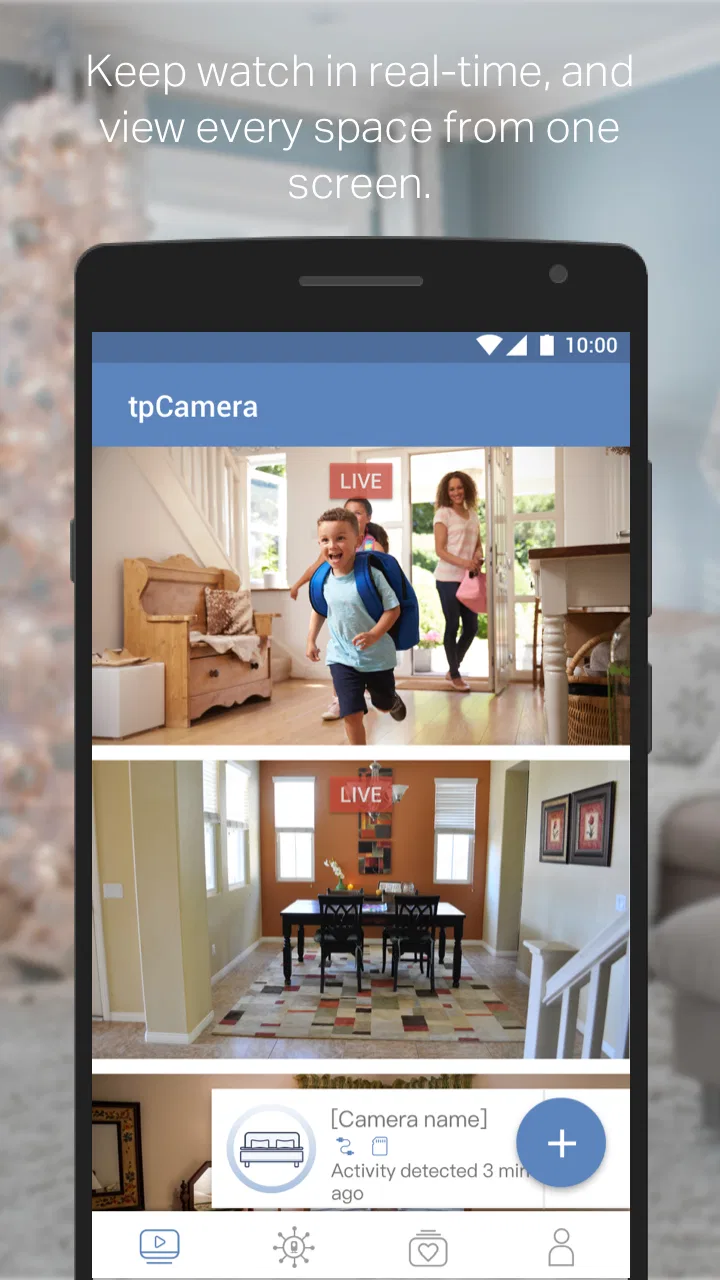
TP-LINK tpCamera offers a range of features including live video streaming, motion detection alerts, video playback, and the ability to take snapshots. Users can also manage multiple cameras through a single interface and receive push notifications for real-time updates. The app is designed to provide a comprehensive surveillance solution directly on your mobile device.
04How secure is the TP-LINK tpCamera app?
The TP-LINK tpCamera app prioritizes user security by employing encryption methods to protect video data and user information. It also requires a secure login with your TP-LINK account, ensuring that only authorized users can access live feeds and recordings. Regular updates are provided to enhance security features and address any vulnerabilities.
05Can I use TP-LINK tpCamera without an internet connection?
To fully utilize TP-LINK tpCamera, an internet connection is required for features like live streaming and remote access. However, some local functionalities may be available via direct Wi-Fi connection, depending on the camera model. For complete access to all features, ensure a stable internet connection is available for your mobile device and camera.
Pros
- Easy setup with step-by-step guide.
- High-quality video streaming capabilities.
- Remote access from anywhere via app.
- Motion detection alerts enhance security.
- Supports multiple cameras for broader coverage.
Cons
- Requires stable internet connection.
- Subscription needed for cloud storage.
- Limited free features available.
- App interface can feel cluttered.
- Notifications can be overly sensitive.

TP-LINK tpCamera
Gallery